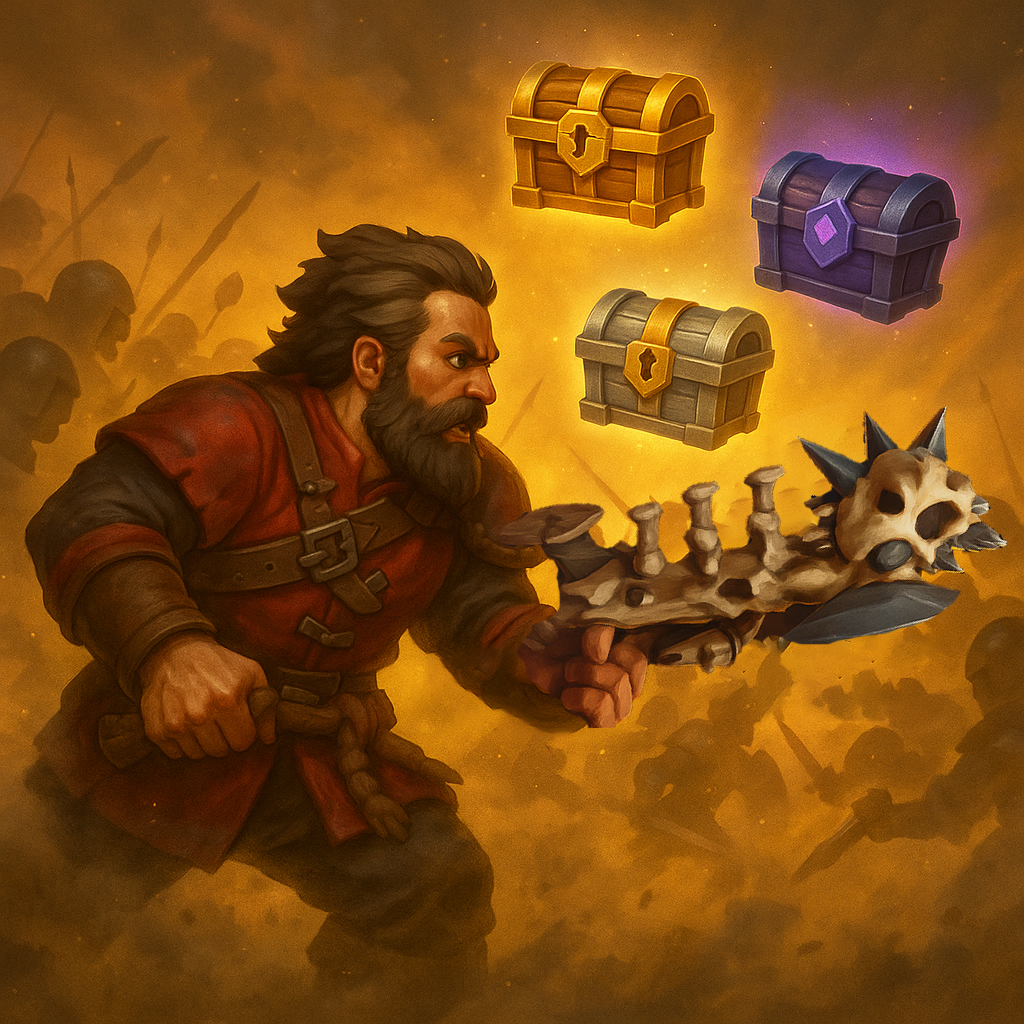
Play friendly Arena matches with Hook Master to unlock Hook Master Event Chests. Exclusive rewards—and a chance to win Hook Master himself.
He doesn’t talk. He doesn’t joke. But when Hook Master enters the Arena — players disappear.
The Hook Master Event Chests are now live in Chain of Legends, and they come with a simple rule:
Use Hook Master in Friendly Arena matches.
Every time you Win in match, it counts. You just need to beat the person facing.
🥈 Play 3 matches ➤ Unlock the Silver Chest
🥇 Play 10 matches ➤ Unlock the Gold Chest
💎 Play 30 matches ➤ Unlock the Diamond Chest
Each chest holds exclusive event items — but that’s not all. One jackpot hides inside: Hook Master himself.
To get started, challenge a friend. This is a Friendly Match event only. You’ll need allies, not enemies, to unlock the full Hook Master Event Chests rewards.
You do not need to win. Just fight with Hook in Friendly Mode.
🔹 Can I unlock all three chests?
Yes. The more matches you play with Hook Master, the more chests you unlock. The rewards stack, so if you play 30 matches, you’ll receive all three chests.
🔹 Do I need a friend to play?
Yes. This event is available only in Friendly Arena matches, so invite a friend or guildmate to duel. Matches against bots or ranked Arena do not count.
About the Author:
<details class=”wp-block-details is-layout-flow wp-block-details-is-layout-flow”><summary>SPG is a content creator and lore builder at Chain of Legends, where he brings the game’s world—and its legends—to life. From writing troop backstories like Hook Master to crafting in-game event narratives, he blends crypto strategy with immersive storytelling</summary>
SPG is the Content Manager for Chain of Legends, creating clear and engaging content that helps players understand events, features, and game systems. He focuses on delivering accurate, easy-to-read updates that connect the community with the evolving world of Chain of Legends.
Play-to-earn crypto games in 2025 are no longer hype—they’re playable, rewarding, and in some cases, downright fun. We’re finally seeing Web3 crypto games evolve past basic mechanics into polished experiences that blend strategy, storytelling, and real ownership.
In this guide, I’ve picked the 5 best play-to-earn crypto games 2025 has to offer. I’ve seen them, researched their communities, and tracked their economies. These aren’t “someday” projects. These are live, thriving, and giving players real reasons to stay engaged.
Genre: Open-world RPG, Auto Battler Platform: PC (Epic Games), Immutable X chain
Why It Stands Out
Illuvium is the gold standard for AAA-level Web3 crypto games. It’s not just a flashy demo — it’s a playable, polished experience that feels like a real game, not just a crypto wrapper. Between open-world exploration and auto-battler strategy, it manages to appeal to both hardcore and casual players.
The lore is deep, the visuals are top-tier, and the devs are building an entire ecosystem: Arena, Overworld, and Zero (land mode) all work together to create long-term engagement. It’s the game that Web3 gaming needed to prove it could be legit.
How You Earn
Players earn $ILV and trade NFTs like Illuvials (battle companions), weapons, and cosmetics. Those who own land generate passive income from other players’ activity. Illuvium also has staking and yield mechanics — all fully integrated into its economy.
Community Vibes
Illuvium has one of the most active and professionally run Discords in the space. Weekly updates, playtests, tournaments, and influencer collabs keep the hype alive — and not in a scammy way. It’s got real traction, and players genuinely care about the project.
Illuvium: The AAA Web3 crypto game redefining blockchain RPGs in 2025
Explore, capture, and earn in Illuvium’s immersive open world.
Genre: Strategic PvE, Real-Time PvP Platform: Browser + Mobile
Why It Stands Out
Chain of Legends mixes strategy, manual PvP, and tokenized rewards like no other. It doesn’t try to be flashy—it just delivers consistent, strategic gameplay and an active economy that rewards players who actually show up and think.
With its real-time arena battles, dungeon raids, and resource conquest modes, Chain of Legends gives you full control. If you win, it’s because you earned it—not because your wallet’s bigger.
How You Earn
$CLEG is the core token, and you earn it by mining, completing dungeons, conquering treasure islands, and trading in-game assets. Troops and items are NFTs. The CLEG burn mechanism keeps supply in check and value moving.
Community Vibes
The community is small but committed. PvP banter is active on Telegram, and players genuinely help each other grow. Devs run limited-time events and item shops that reward game knowledge, not just money.
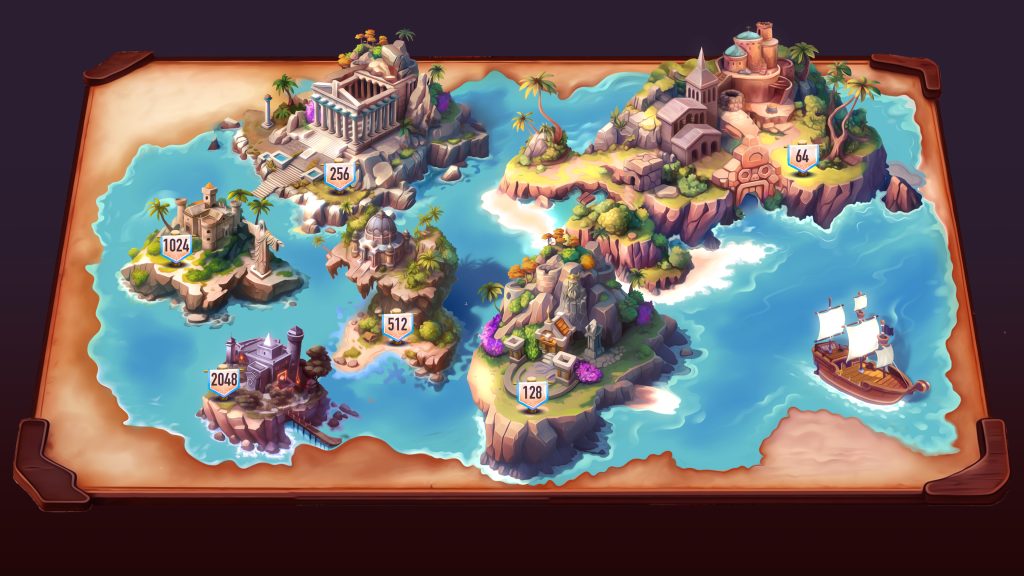
Chain of Legends – Tokenized strategy and real-time PvP packed into one powerful Web3 brand.Manual PvP battles, dungeons, and treasure hunts — Chain of Legends in action.
Genre: Multiplayer Action RPG Platform: PC (Standalone Client)
Why It Stands Out
Big Time is a fast-paced dungeon crawler that feels familiar to any ARPG fan—but it’s powered by NFTs and tokenized cosmetics. It’s one of the few play-to-earn crypto games that actually gets the “game” part right.
The time-travel storyline, smooth co-op experience, and beautiful loot system make it engaging even if you’re not into crypto. And for those who are? There’s real value in the gear you earn and craft.
How You Earn
You earn cosmetic NFTs, forge gear with real value, and generate $BIGTIME tokens through gameplay. SPACE owners (NFT land) can also set up crafting stations for passive income.
Community Vibes
Big Time has a solid Discord and a growing Twitch presence. Devs are responsive, patches are regular, and the community is genuinely excited—not just farming.
Big Time – action-packed, time-traveling RPG in Web3.
Battle through dungeons and earn tradable NFTs in Big Time.
Genre: Social Farming / Open World Platform: Browser, Mobile
Why It Stands Out
Pixels is light, charming, and shockingly addictive. It’s like Stardew Valley meets crypto. Players plant, build, decorate, and socialize in a pixel-art world powered by NFT land and items.
It’s one of the best P2E games 2025 offers for newcomers. No heavy wallet setup, no “gas” worries—just log in and play. The barrier to entry is low, and the community is warm.
How You Earn
Players earn $BERRY tokens from farming, quests, and item crafting. Land and cosmetic NFTs hold real value and are actively traded.
Community Vibes
Pixels has one of the most active Telegram groups and hosts regular creative events. Think chill vibes, not competitive rage.
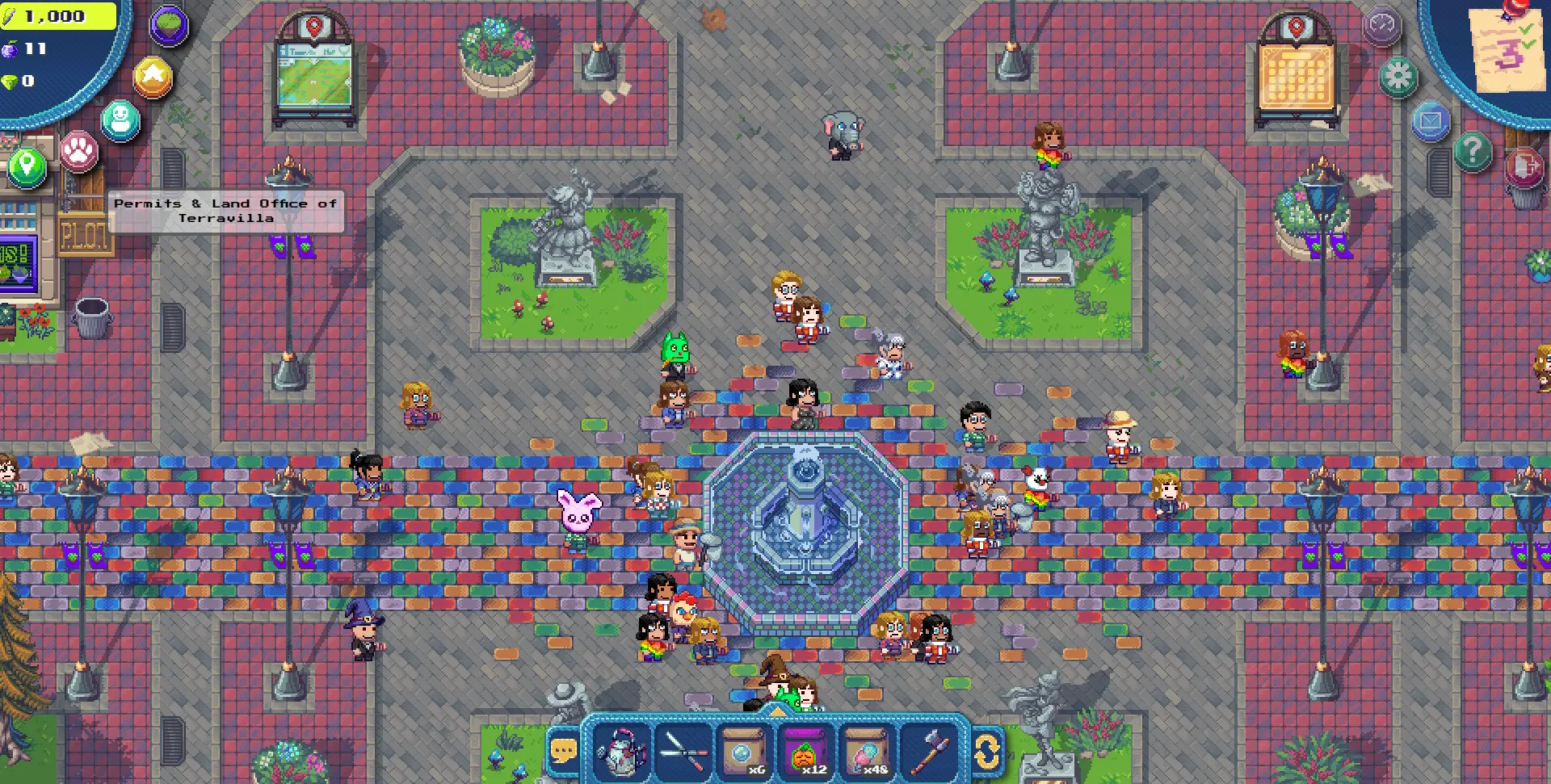
Farm, build, and earn in this charming pixel-art metaverse.
Pixels – cozy, accessible, and built for Web3 fun.
Parallel is deep, dark, and strategic. If you’re a card game purist or sci-fi fan, this is where you belong. It’s not flashy—but its lore, art style, and gameplay depth are unmatched in the blockchain space.
It doesn’t feel like a “crypto game.” It feels like a well-built TCG that just happens to let you earn while playing. The card deck NFTs are well-balanced and backed by a token economy ($PRIME) that actually works.
How You Earn
Win ranked matches, earn PRIME, and trade high-rarity card NFTs. Cards gain value from both gameplay strength and collector demand.
Community Vibes
Parallel attracts smart players and lore fans. The Discord is active, the devs are thoughtful, and there’s a clear sense of long-term vision.
Parallel – competitive, lore-rich card battles on blockchain.
Sci-fi deckbuilding and Prime token rewards in Parallel.
Final Thoughts on Play-to-Earn Crypto Games 2025
Web3 gaming has finally hit a playable, profitable stride. These five play-to-earn crypto games show what happens when solid mechanics meet real ownership. Whether you’re into strategy, farming, fast-paced battles, or card mastery—2025 has a P2E title worth your time.
And remember: earning should be the bonus, not the goal. If the game isn’t fun, it’s just finance.
Choosing your first—or next—Web3 game isn’t just about profit. It’s about finding a world that clicks with your playstyle, your strategy, and your time. Whether you want to farm casually, battle tactically, or trade cards like a pro, one of these five games will meet you there.
If you’re just starting out, or even if you’re still wrapping your head around wallets and NFTs, here’s your cheat code to go deeper:
A play-to-earn (P2E) crypto game lets players earn real-world rewards—usually in the form of cryptocurrency or NFTs—by playing the game. These games often include battles, trading, farming, or strategy elements tied to a blockchain economy.
Do I need a crypto wallet to start?
Most of the time, yes. Web3 crypto games usually require a wallet like MetaMask or a built-in wallet system to manage your tokens and NFTs. However, some beginner-friendly titles like Chain of Legends, offer guest options or easy onboarding.
Are these games free to play?
Some are! Pixels and Chain of Legends offer free-to-play paths with earning potential. Others like Illuvium or Big Time may require NFTs or tokens to access premium features or increase your earnings.
Can I really make money from these games?
Yes—but results vary. Some players flip NFTs or earn consistent token rewards, while others treat it like a fun bonus. Always do your own research and never invest more than you’re willing to lose.
What are the top crypto games to earn money in 2025?
Games like Illuvium, Chain of Legends, Big Time, Pixels, and Parallel stand out in 2025. Each offers different playstyles—from farming and PvP to card battles—and they all include real reward systems through NFTs or tokens. These are some of the top crypto games to earn money while enjoying actual gameplay.
Get Started with Crypto Gaming Guide: What You Need to Know
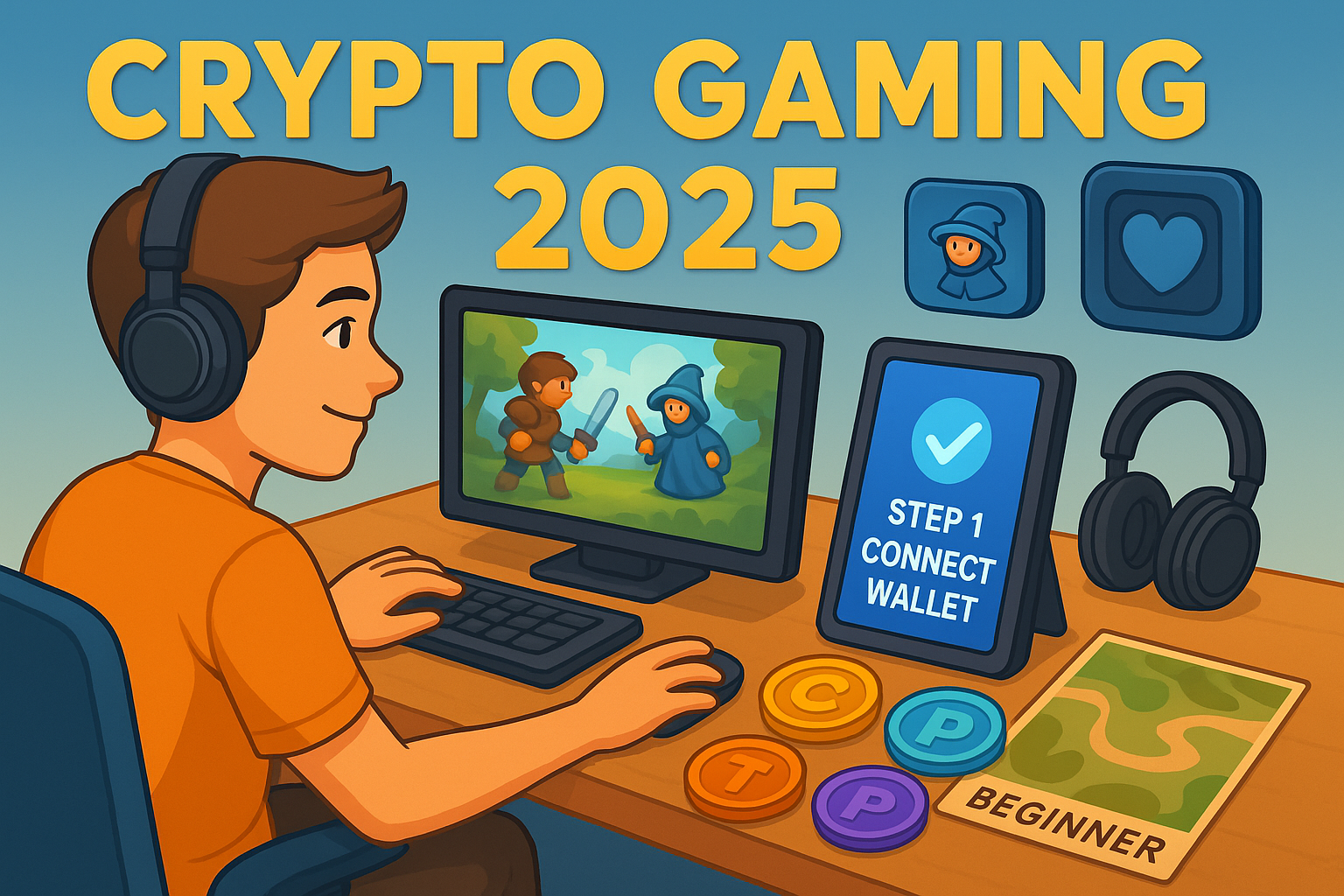
Want to get started with crypto gaming? In 2025, it’s easier than ever. This crypto gaming guide walks you through everything you need — from setting up your wallet to picking your first blockchain game, and how to play blockchain games to earn real rewards.
Unlike traditional games where everything is locked in a central server, crypto games use smart contracts and tokenized systems to make rewards tradeable, trackable, and sometimes interoperable across different games.
Here’s what that means in practice:
You own your items: NFTs represent characters, weapons, cosmetics — assets you can sell, rent, or upgrade.
Earn as you play: From daily quests to PvP tournaments, rewards come in the form of tokens with real-world value.
No middlemen: Blockchain handles transactions — no publishers limiting your access to in-game assets or resale rights.
Open economies: In-game markets are shaped by players behavior — prices, scarcity, and demand aren’t dictated by developers but evolved naturally.
Crypto games in 2025 go far beyond just tokens and earning potential. Many titles have evolved significantly, with some now rivaling AAA games in both gameplay depth and visual quality.
This guide will walk you through exactly how to get started, what tools you’ll need, and how to avoid rookie mistakes. Not sure where to begin? Here’s a quick overview of what we’ll cover:
The first thing you need to get into blockchain games is a wallet , crypto wallet to be exact. It’s used for logging in, managing your inventory, making payments, and storing everything from rewards and tokens to NFTs. In short, it holds all your game-related assets securely in one place.
What Makes Crypto Wallet Suitable for Games
Browser & Mobile Friendly: You’ll want something easy to connect across devices.
Multi-chain Support: Some games run on Ethereum, others on Solana or BNB Chain. A wallet that supports several networks saves you from switching all the time.
Game Compatibility: It might be a good idea to use the wallet that the game itself recommends to avoid connection issues.
Recommended Wallets
MetaMask — Originally built for Ethereum, but also works with many major networks like Polygon, BNB Chain, and Avalanche.
Trust Wallet — Popular mobile wallet with support for multiple blockchains.
Now that your wallet is ready, it’s time to find a game that fits your style. The Web3 gaming space is expanding quickly, but not every title is worth your time. Your first game should be easy to get into, active in development, and ideally offer a way to play without spending money upfront.
How to Choose a Game
Genre & Gameplay: Choose something you’d enjoy even without the crypto layer. Whether it’s an RPG, shooter, card battler, or strategy game — fun should come first.
Entry Cost: Many solid games are free-to-play or offer trial modes. Avoid paywalls unless you’re confident this is the game you want to stick with.
Blockchain & Wallet Support: Check which blockchain the game runs on — like Ethereum, Polygon, or BNB Chain — so you can prepare your wallet accordingly or switch if needed.
Active Development: Look for regular updates, developer communication, and an active player community. Abandoned games are still common in Web3.
Recommended Games for Beginners
The Sandbox — A metaverse builder where players can own land, create experiences, and trade digital assets. It’s highly social and great for creators who enjoy building mini-games or storefronts.
Chain of Legends — A well-balanced browser-based strategy game that’s easy to pick up but offers depth over time. It’s free to play, with mining, land upgrades, and both PvE and PvP battles. A great entry point for learning Web3 game mechanics in a smooth and rewarding way.
Gods Unchained — A free-to-play tactical card game where you collect and trade NFT cards. Offers solid strategic gameplay and competitive tournaments with token rewards.
Big Time — A fast-paced action RPG with multiplayer co-op and NFT loot. Combines time-travel themes with impressive combat and visuals.
Axie Infinity — One of the first major blockchain games to gain global traction. Players collect, breed, and battle Axies — fantasy creatures that also function as NFTs. It offers both casual and competitive modes, with play-to-earn potential through token-based rewards.
Get started with crypto gaming in the metaverse.
A smart way to get started with crypto gaming.
Get started with crypto gaming through battles.
Action RPG to get started with crypto gaming.
Get started with crypto gaming here.
🕹️ Try a few games before committing. Many allow you to explore without connecting a wallet or making any purchases.
Once you find something that clicks, you’ll start learning how wallets, tokens, and in-game economies work — by playing, not reading manuals.
Step 3: Start Playing and Get Comfortable
Once you’ve chosen a game, jump in and get started with crypto gaming by playing.. Most Web3 games let you connect your wallet directly — no passwords or accounts to manage. A quick tutorial or intro mission usually shows you how everything works.
As you play, you’ll start to see how rewards, NFTs, and in-game currencies function. Don’t stress about earning or trading right away. Focus on the experience first.
🎯 If the game isn’t fun, it’s not worth your time.
By getting hands-on, you’ll naturally figure out when to upgrade your assets or fund your wallet — and which games are worth investing in.
Step 4: Fund Your Wallet (If Needed)
You can play many blockchain games for free, but spending a bit of crypto can unlock advanced features, premium NFTs, or speed up your progress. If you’re ready to commit to a game, the next step is funding your wallet with the appropriate cryptocurrency.
How to Add Crypto to Your Wallet
Use a Centralized Exchange (CEX): Create an account on trusted platforms like Binance, Coinbase, or OKX.
Buy the Right Token: Check which blockchain the game runs on and buy the corresponding token. For example:
ETH for Ethereum games
MATIC for Polygon-based games
BNB for BNB Chain titles
Withdraw to Your Wallet: Copy your wallet address carefully and withdraw the tokens from the exchange to your wallet. Make sure you select the right network — sending tokens to the wrong chain can result in permanent loss.
⚠️ Watch the fees: Ethereum gas fees can spike during high activity. Consider Polygon or BNB Chain games for lower costs.
You don’t need to go all-in. Start with what you’re comfortable spending — even $10–$20 worth of crypto is enough to get started in most games.
💡 Pro Tip: If you’re still unsure, choose games that let you explore and play without spending anything upfront. 🕹️ You can always fund your wallet later once you feel confident and ready to commit.
Step 5: Stay Safe While Gaming
Crypto gaming can be incredibly rewarding — but it’s also a space where mistakes can cost you real assets. Fortunately, staying safe is simple once you know the hacks. This isn’t being paranoid — it’s about being smart with your stuff.
The Most Common Threats (and How to Avoid Them)
⚠️ Fake Game Websites: Scammers often copy popular game sites and lure players through search ads or social links. Bookmark the real URL and don’t click random links from chats.
📩 Discord & Twitter DMs: No legit game team will DM you first offering rewards, airdrops, or “urgent wallet help.” If someone does — it’s a scam. Mute or block immediately.
🔗 Sketchy Wallet Pop-Ups: If a site suddenly prompts a transaction you weren’t expecting — cancel it. Always double-check what you’re approving in your wallet.
🪤 Too-Good-To-Be-True Deals: Free NFTs? Guaranteed profits? Early mint access for $3? If it sounds too perfect — it’s probably bait.
Smart Player Safety Tips
🔐 Your Seed Phrase = Your Everything: Write it down and store it offline. If someone has it, they can drain your wallet. No game admin, mod, or dev will ever ask for it.
🧪 Use Burner Wallets for Testing: When trying a new game, create a new wallet just for that game. Don’t use the one that holds your main assets or expensive NFTs.
🧭 Double-Check URLs: Most rug pulls happen because players connect their wallet to a scam site. Check URLs letter by letter. Bookmark the good ones.
🧱 Use Revoke Tools: Occasionally visit sites like revoke.cash to remove permissions you no longer need. It’s like spring-cleaning for your wallet.
💡 Web3 security is about habits, not hacks. Learn to spot the red flags, and most threats become irrelevant.
Stay sharp, trust official sources, and don’t let hype override caution. Once safety becomes second nature, you can focus on what actually matters — enjoying the game.
Final Thoughts: You’re Ready to Dive In
You’ve just finished reading our crypto gaming guide 2025. By now, you’ve got everything you need to step into the world of crypto gaming — and do it right.
You’ve set up your wallet, picked your first game, learned how funding works, and most importantly, how to stay safe. Whether you’re here to earn, explore, or just enjoy a new kind of gaming, you’re no longer on the sidelines.
Start small, stay smart, and remember — the best way to get started with crypto gaming is by actually playing.
🚀 Ready to jump in? TryChain of Legends — it’s free to play, gas-free for beginners, and built for gamers who want to experience Web3 without the hassle.
No. Many games offer free-to-play options or let you explore before asking you to fund your wallet. Start playing, and only add crypto when you’re ready to commit.
🔐 Is crypto gaming safe?
It can be — if you follow basic safety rules. Use official links, protect your seed phrase, and avoid DMs promising rewards. Treat your wallet like your main game account — don’t share access.
🧠 Do I need to understand blockchain to enjoy these games?
Not really. If you can manage an online account or mobile app, you can play crypto games. You’ll pick up the Web3 basics as you go.
💸 Can I really earn money playing?
Yes, but it depends on the game, your time investment, and the market. Some players earn through trading NFTs, winning tournaments, or holding in-game tokens — but nothing is guaranteed.
🕹️ What’s the best game to start with?
It depends on your style. For casual and strategic players,Chain of Legends is a great starting point. It’s browser-based and easy to learn.
🤔 What’s the easiest way to get started with crypto gaming?
Just pick a free-to-play game like Chain of Legends, connect your wallet, and start exploring. No investment needed upfront.
The Chain of Legends Team is a group of developers and crypto gaming enthusiasts behind the game Chain of Legends. With a passion for making Web3 gaming accessible, the team creates guides and tools to help new players get started in the space — safely, confidently, and without technical friction.
In 2025, Web3 gaming isn’t just innovation—it’s a shift in who holds power inside virtual economies. Traditional games lock players into closed economies—Web3 gaming flips the model by using blockchain to enable real ownership, tradeable assets, and decentralized progression.
The concept isn’t just theoretical. Since 2017, early projects like CryptoKittieshave evolved into full ecosystems where:
In-game items hold real-world value
Communities help drive development
Players can earn crypto for their time and skill
In this guide, you’ll learn:
What makes Web3 gaming different
How blockchain powers this shift
Which tools and games are worth your time in 2025
👉 Want a hands-on walkthrough? Our Beginner’s Crypto Gaming Guide(coming soon) shows how to set up wallets, accounts, and start earning.
Whether you’re here to play, invest, or build, this article gives you the foundation to understand why Web3 gaming matters—not just for the future of games, but for digital economies as a whole.
What Makes Web3 Gaming Different from Traditional Gaming
In traditional gaming, players invest countless hours grinding for rare items and achievements, yet they never truly own their rewards — everything remains under the control of game publishers. Items, skins, and digital currencies are locked within centralized servers. If the publisher shuts down the servers or changes terms of service, players can lose everything overnight, often without warning or compensation.
Ubisoft and The Crew are a perfect recent example of this. In early 2024, Ubisoft shut down the servers for The Crew (2014), completely removing access for players — not just to multiplayer features, but to the entire game, including offline modes. According to Polygon and GamesRadar, Ubisoft stated that players only bought “a license to access” the game during its operational period — not true ownership.
Web3 gaming disrupts this model by giving players true digital ownership of their assets, which is secured and powered by blockchain technology. Web3 gaming enables:
Ownership: In-game assets like weapons, skins, and land are minted as NFTs that players can truly own, trade, or sell, independent of any publisher.
Play-to-Earn Mechanics: Games reward players with crypto tokens that can be exchanged for real-world value, empowering gaming as a source of income.
Interoperability: Some projects allow assets to move between different games and platforms, creating entirely new cross-world economies and player experiences.
The shift empowers players by creating real-world value for their achievements, fostering decentralized economies, and introducing Play-to-Earn mechanics. It’s a revolution that transforms players from consumers into stakeholders, redefining the future of gaming forever.
Blockchain acts as the invisible backbone of Web3 gaming, enabling secure transactions, verified ownership, and decentralized economies through several key mechanisms:
Smart Contracts: Automatically executing transactions and enforcing game rules without intermediaries, ensuring fairness and transparency.
NFTs: Verifying ownership of unique in-game assets like skins, characters, and properties that players can keep, trade, or sell.
Decentralized Economies: Allowing players to shape supply, demand, and governance through token-based economic systems and DAO-driven community governance.
Blockchain technology removes the need for trust in centralized authorities, giving players true control over their digital lives.
The Web3 gaming landscape is exploding with innovation. These projects are not just games—they are evolving ecosystems blending entertainment, investment, and community-building. Here are some standout titles shaping the future of gaming:
Axie Infinity
Axie Infinity is one of the most successful Web3 games to date.
Often considered the godfather of Play-to-Earn, Axie Infinity lets players breed, battle, and trade adorable creatures called Axies. Built on the Ethereum blockchain and later migrated to its custom Ronin sidechain, Axie introduced millions to blockchain gaming and NFT economies. While it kicked off the NFT gaming boom, its economy faced massive challenges during 2022–2023 due to hyperinflation of in-game rewards. Developers responded with economic adjustments like token burning and new game modes to restore balance. Today, Axie Infinity serves as both a trailblazer and a cautionary tale for future Web3 projects.
The Sandbox
The Sandbox empowers players to build, monetize, and explore a voxel-based metaverse.
Imagine Minecraft meeting blockchain—that’s The Sandbox. Players buy, build, and monetize virtual land experiences using the SAND token. The Sandbox’s metaverse is backed by collaborations with Snoop Dogg, Adidas, Atari, and over 160 other brands, turning the platform into a virtual playground where pop culture and blockchain tech converge. Its blend of user-generated content and brand activations positions it as a future giant in the gaming multiverse economy.
Illuvium
Illuvium brings cinematic-quality exploration and combat to the Web3 gaming space.
A visually stunning open-world RPG where players hunt, capture, and battle creatures called “Illuvials,” each represented by NFTs. Illuvium sets itself apart with AAA-level production values—3D graphics, DeFi staking, and auto-battler mechanics. It appeals both to traditional gamers looking for quality and crypto investors seeking yield farming opportunities tied to game performance.
Chain of Legends
Chain of Legends combines mining, PvP battles, and real rewards in a play-to-earn Web3 environment.
Our own flagship project, Chain of Legends, offers strategic resource management, NFT mining, and PvP battle opportunities in a player-driven economy. Designed to be accessible with low entry barriers, it combines the thrill of building and conquering with real-world earning opportunities. Chain of Legends focuses on sustainable Play-to-Earn models, learning from early Web3 gaming failures to build a long-lasting community and economy.
Gods Unchained
Gods Unchained is a competitive card battler where ownership and strategy drive gameplay.
A tactical trading card game where players truly own their cards as NFTs. Designed by ex-Magic: The Gathering developers, it emphasizes strategic depth and fairness over pay-to-win mechanics. Players can earn cards by playing, then freely trade or sell them on the open market, making skillful deckbuilding a real source of value.
Big Time
Big Time merges fast-paced combat with NFT-powered progression and time-travel storytelling.
A time-traveling multiplayer RPG where players fight across historical eras to collect rare NFT-based loot. Big Time innovates by offering cosmetic NFTs that players can equip, sell, or showcase, blending MMO mechanics with asset ownership. Its strong art style and action combat are designed to appeal to both Web3 enthusiasts and mainstream RPG fans.
4 Major Benefits of Web3 Gaming for Players and Investors
Web3 gaming offers serious advantages that go far beyond entertainment:
True Ownership
Say goodbye to locked accounts and inaccessible items. In Web3 gaming, assets like skins, weapons, and land are minted as NFTs, providing permanent proof of ownership. Even if a game shuts down, your assets exist independently on the blockchain. This shift empowers players to treat their digital achievements like real-world assets—collectibles, investments, or even business tools.
Real Value Creation
Unlike traditional games where rewards stay trapped in centralized ecosystems, Web3 gaming allows players to monetize their skills and time. Winning a tournament, mining resources, or selling a rare NFT can generate real-world income. For professional gamers and casual players alike, Web3 gaming transforms entertainment into an actual economic opportunity.
Decentralized Power
Governance tokens and decentralized autonomous organizations (DAOs) allow players to vote on key decisions in many Web3 games. Instead of being passive consumers dictated to by corporations, players influence game updates, tokenomics, and development priorities. This decentralized model creates vibrant communities where loyalty and active participation are rewarded.
Early Investment Opportunities
Supporting a promising Web3 game early can lead to significant returns. Early adopters often access exclusive NFT drops, governance rights, and in-game advantages. Some early backers of successful Play-to-Earn projects saw the value of their digital assets skyrocket as the games gained mainstream popularity. For gamers and investors alike, Web3 opens the door to unprecedented upside potential.
For new players entering the space, this article acts as a hands-on blockchain gaming guide—highlighting what to expect, avoid, and pursue in 2025.
Challenges and Risks to Watch Out For
Despite its exciting potential, Web3 gaming carries notable risks that players and investors must understand:
Gas Fees
Blockchain transactions often require gas fees — payments to incentivize validators to process transactions. These fees can surge unpredictably during periods of high network demand. For example, during peak moments in Ethereum’s NFT boom in 2021, simple actions like minting an NFT could cost users over $100 in gas fees. Although Layer 2 solutions like Polygon and Optimism aim to reduce these costs, players must still remain cautious when choosing the platforms they engage with.
Scams and Rug Pulls
The decentralized nature of blockchain gaming is empowering but also risky. Not every project is legitimate. In 2022–2023, multiple fake Play-to-Earn games attracted players and investors, only to vanish after collecting funds. Because anyone can launch a token or a game, players must exercise serious diligence, checking for audits, whitepapers, and active communities before getting involved.
Market Volatility
Crypto markets are notoriously unstable. A game’s native token could soar in value one week and crash the next. For players who invest heavily in a game’s ecosystem—whether through NFTs or token holdings—this volatility could significantly affect asset values and in-game earnings. Successful Web3 gamers balance passion with financial caution, recognizing the speculative nature of the space.
Adoption Challenges
Although Web3 gaming is growing rapidly, mainstream adoption still faces hurdles. Gas fees, confusing wallet setups, and skepticism around NFTs all slow mass onboarding. Projects that simplify onboarding, subsidize gas fees, or hide blockchain complexities from users will likely dominate the next wave of growth.
Future Trends in Web3 Gaming (2025 and Beyond)
Web3 gaming has already rewritten the rules, but the real evolution is just beginning. Over the next few years, players and investors can expect major innovations that could reshape not only gaming, but digital economies themselves.
Here are the most exciting trends unfolding:
AAA Studios Embracing Blockchain
Until recently, blockchain gaming was dominated by indie developers and experimental projects. However, major studios like Ubisoft, Square Enix, and even Epic Games are now exploring blockchain integration. Expect future AAA releases to feature NFT-based assets, player-owned economies, and blockchain-driven digital collectibles, blending mass-market polish with Web3 innovation.
Interoperable Assets Across Games
Right now, most in-game assets are locked within a single platform. In the future, players will be able to use the same NFT skins, weapons, or characters across multiple games, virtual worlds, and metaverses. Standards like ERC-4907 (for rentable NFTs) and cross-game interoperability protocols will unlock entirely new ecosystems where digital assets truly live independently of any one company.
Evolution of Gaming Guilds
Gaming guilds that manage NFT assets and sponsor players (popularized during the Axie Infinity boom) will continue evolving into professionalized organizations. Some will operate like esports teams, offering scholarships, tournament management, and full digital asset portfolios across multiple games.
New Economic Models
Play-to-Earn will mature into Play-and-Earn or Play-and-Own models. Instead of endless token emissions that inflate and crash economies, future games will focus on sustainable asset creation, scarcity-based rewards, and real economic loops that maintain long-term value for players.
Stronger Regulation and Security
Governments and international bodies are catching up to Web3. Expect clearer regulations around NFT ownership, smart contract audits, KYC requirements, and consumer protection in gaming. This will legitimize the space, attract institutional investors, and help clean up the “Wild West” reputation of early blockchain gaming.
Web3 gaming is not just a passing trend — it’s evolving into a powerful cornerstone of the future digital economy.
Web3 gaming isn’t just a trend—it’s a fundamental shift in how games are built, owned, and experienced. Players are no longer mere customers; they are investors, creators, and true stakeholders in vast, decentralized ecosystems.
Whether you’re a competitive gamer, a creative builder, or a forward-thinking investor, Web3 gaming opens up unprecedented opportunities. It allows you to control your assets, influence game worlds, and earn real rewards from your time and talent.
Ready to experience true digital ownership and Play-to-Earn excitement?
What is Web3 gaming? Web3 gaming uses blockchain technology to allow players to own, trade, and earn real-world rewards through gaming.
Do I need to buy NFTs to play Web3 games? Many Web3 games require starter NFTs, but some offer free-to-play or rental models to lower the entry barrier.
Is Web3 gaming profitable? It can be, but success depends on your strategy, the game’s economy, and broader crypto market conditions. Treat gaming profits cautiously and avoid over-investing.
What wallet should I use for Web3 gaming? MetaMask and Trust Wallet are beginner-friendly and widely supported, but serious gamers might consider hardware wallets for added security. 👉 Our Crypto Wallet Guide for Web3 Gamers(coming soon) breaks down the pros and cons of the most popular choices.
Are the games mentioned still active in 2025? Yes! Titles like Axie Infinity, The Sandbox, Illuvium, Gods Unchained, Big Time, and Chain of Legends are all active and evolving in 2025, though each faces unique challenges and opportunities.
What happens if a Web3 game shuts down? Even if a game shuts down, your NFTs and tokens still exist on the blockchain. However, their value and usability may depend on whether they can be integrated into other games or marketplaces.
Can I transfer my NFTs between different games? Not universally yet. Interoperability is improving with standards like ERC-4907 and cross-platform partnerships, but most NFTs today are still tied to their native games.
Is it better to invest in Web3 gaming tokens or NFTs? Both carry risks. Tokens are often more volatile but highly liquid, while NFTs offer unique ownership and scarcity but may be harder to sell quickly. Diversifying is usually the smartest approach.
This blockchain gaming guide explains how it all fits together for modern gamers and investors.
This article was written by the Chain of Legends team, a passionate group of Web3 gaming experts and blockchain enthusiasts dedicated to empowering players, investors, and builders in the decentralized gaming revolution.